City Jews
To begin with, Jewish landowners came from City families. Families married into each other as they built their businesses and created a web of interrelated Jewish dynasties, sometimes called “the Cousinhood”. Several sought careers as Aldermen and Lord Mayors. This deep engagement with the City of London lay at the heart of their identity as a group.
For the cousinhood, Jewishness was both a shared cultural and spiritual heritage, and a social responsibility. London was the centre of Jewish life in Britain. Rich Jews were communal leaders who gave generously to Jewish and other charities.
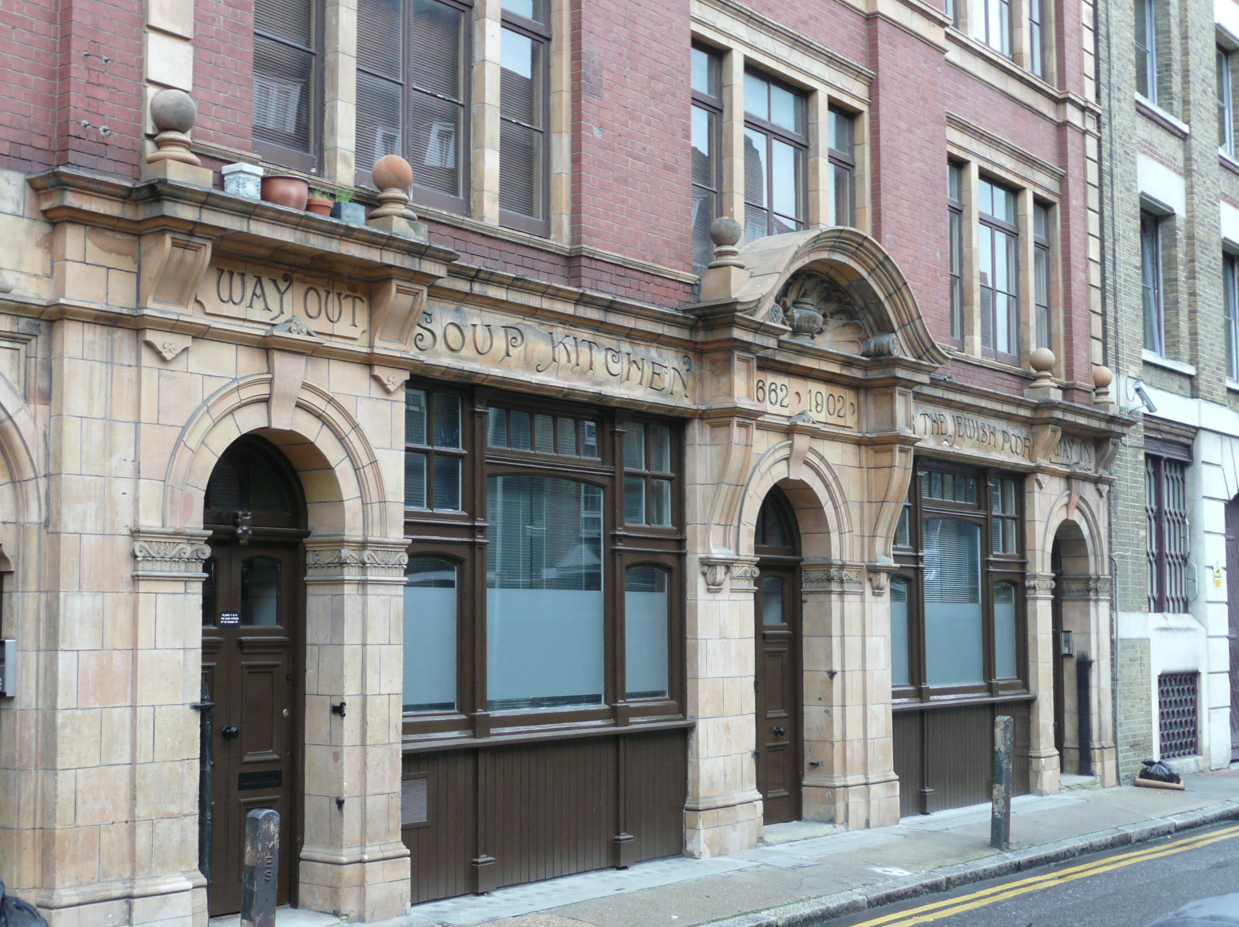
In 1859, the Jewish Board of Guardians created a systematic welfare framework, so poor Jews would not become a charge on the public purse. One of the most iconic charities was the Jewish Soup Kitchen on Brune Street, in the East End.
Photo © Marcus Roberts
The large-scale immigration of poor, Yiddish-speaking, Russian Jews from the 1880s coincided with the first anti-immigration movement in modern Britain. This culminated in the 1905 Aliens Act. The Cousinhood feared anti-alien feeling would foster political antisemitism, which was widespread and virulent in continental Europe. They sought to promote the social and cultural integration of the immigrants through schools and charitable works.
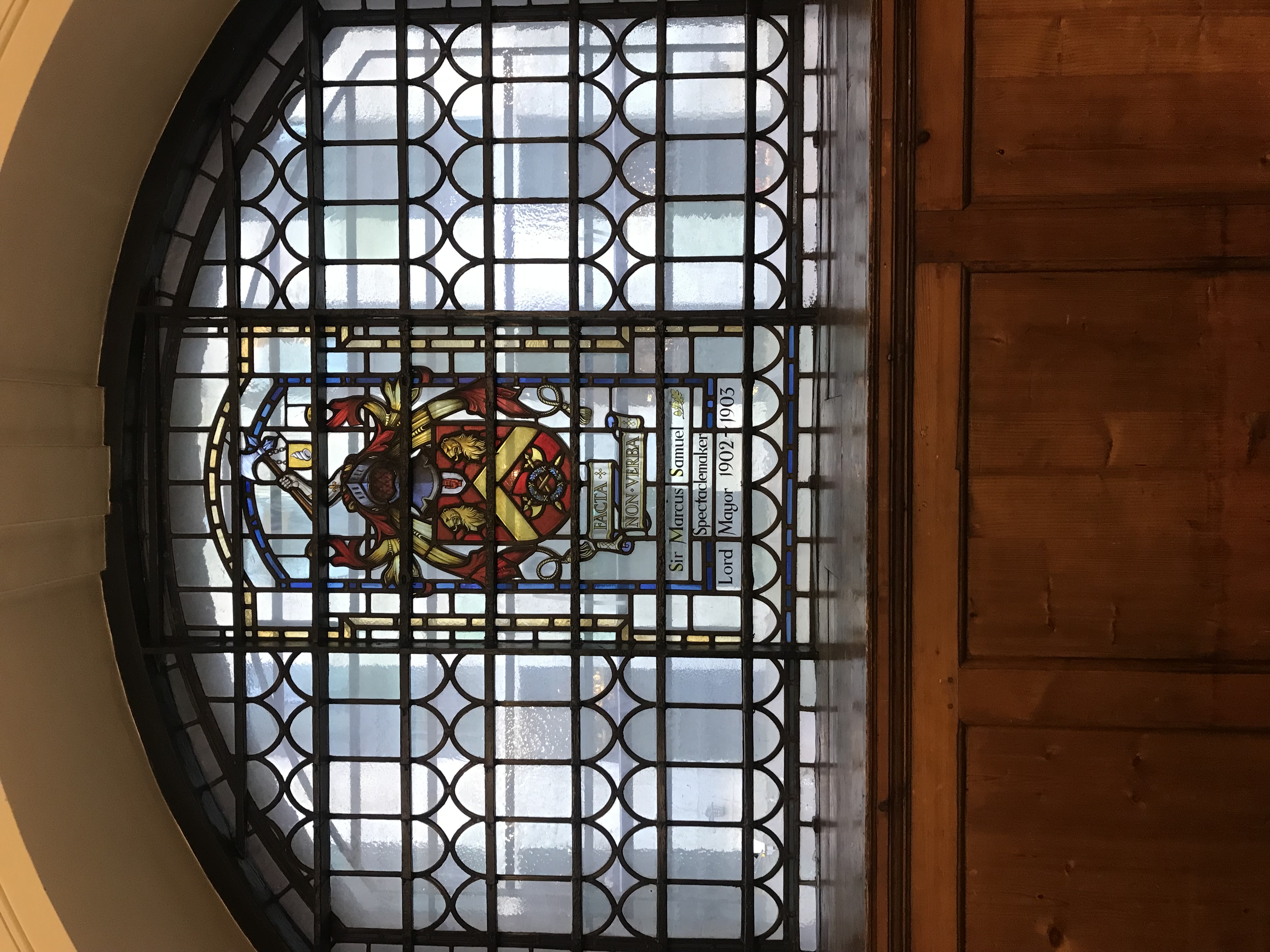
These stained glass windows (above) in the Church of St. Botolph’s Without testify to the role of Jews in the City of London. Here you can see the crests of Marcus Samuel, 1st Viscount Bearsted, and several other Jewish Lord Mayors. Photo © Abigail Green
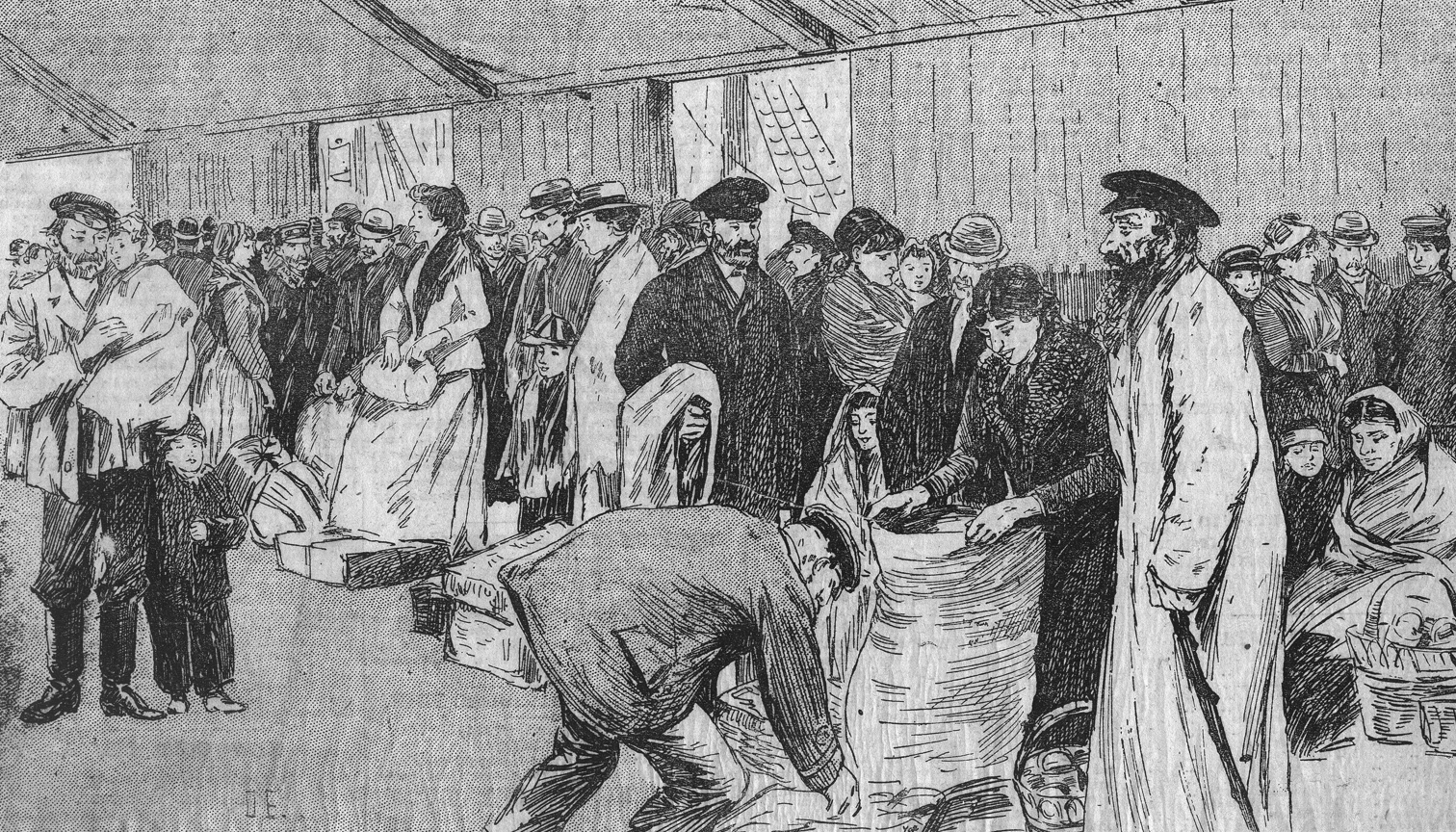
The large-scale immigration of Jews from Russia and Poland, depicted above, transformed Britain’s Jewish community. Many perceived them as an “alien” invasion. The Alien Invasion: Searching the Baggage of Immigrant Jews in the Transit Shed at Tilbury. Unknown artist. Via Wikimedia Commons.

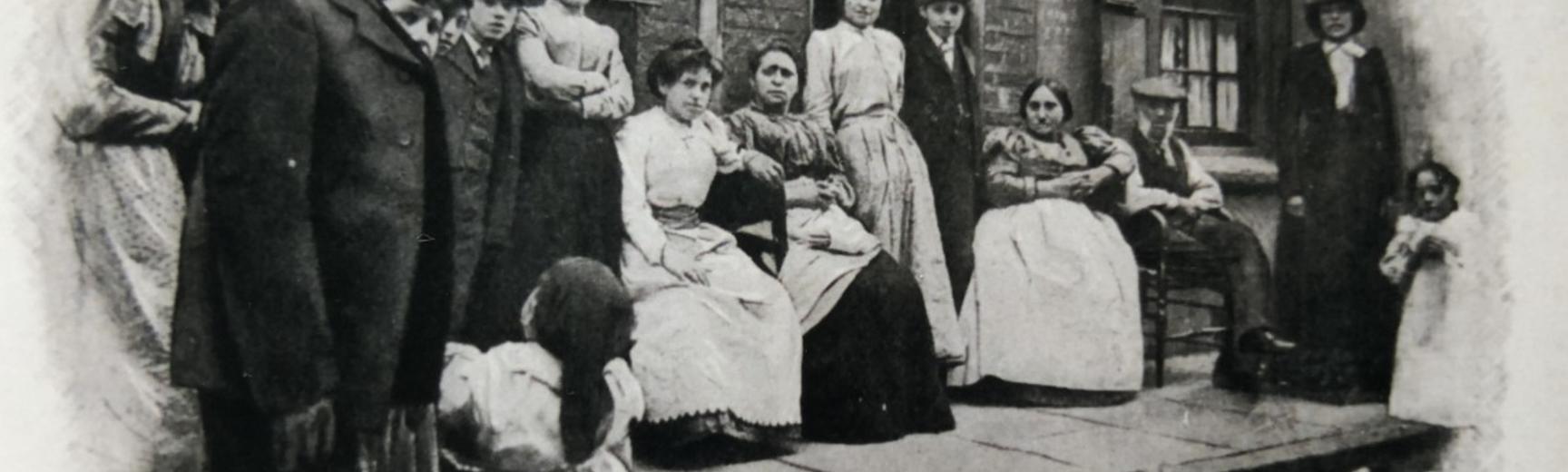
Poor Jewesses Taking The Air By Their Street Doors. This image conveys well the poverty and sense of community that characterised Jewish life in London’s East End. To contemporaries, Jewish men and women seemed exotic and “other”. Photo © Marcus Roberts
Exhibition continues: Between Britain and Europe

