
Land and Citizenship
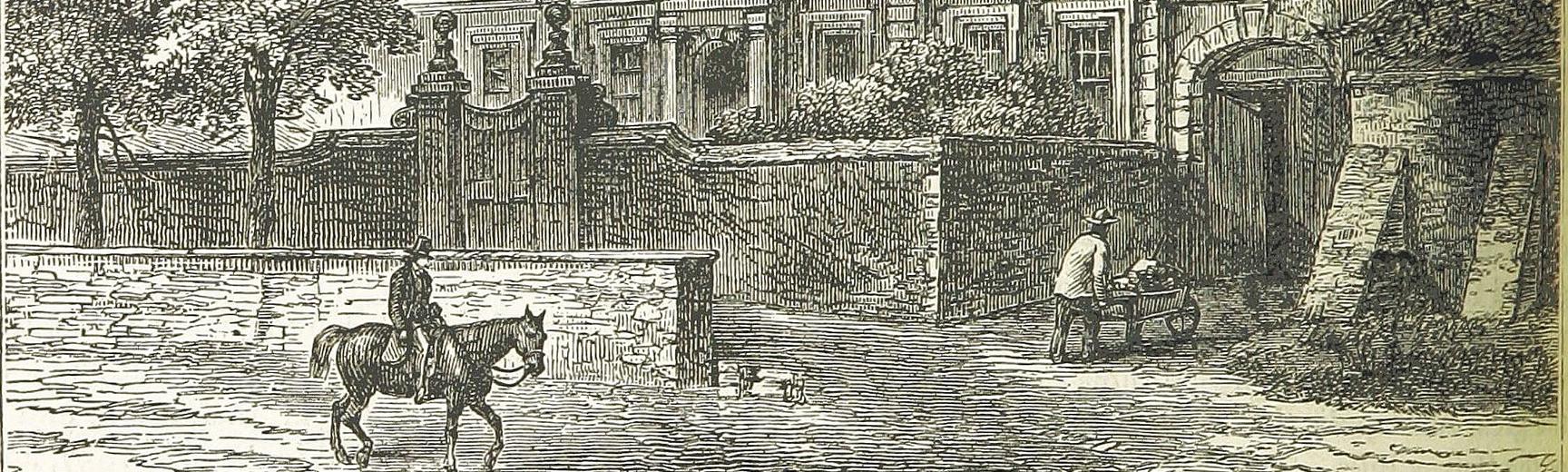
Jews had been expelled from England in 1290. When they returned under Oliver Cromwell, they settled at first in urban areas. Many professions and occupations remained barred to them and until the early 19th century Jews were deprived of basic civil rights.
A few British Jews were wealthy enough to acquire country houses as part of their pathway to belonging.
A Jewish landed interest? ... Is not this the boldest experiment that ever was made by any Christian nation on earth?"
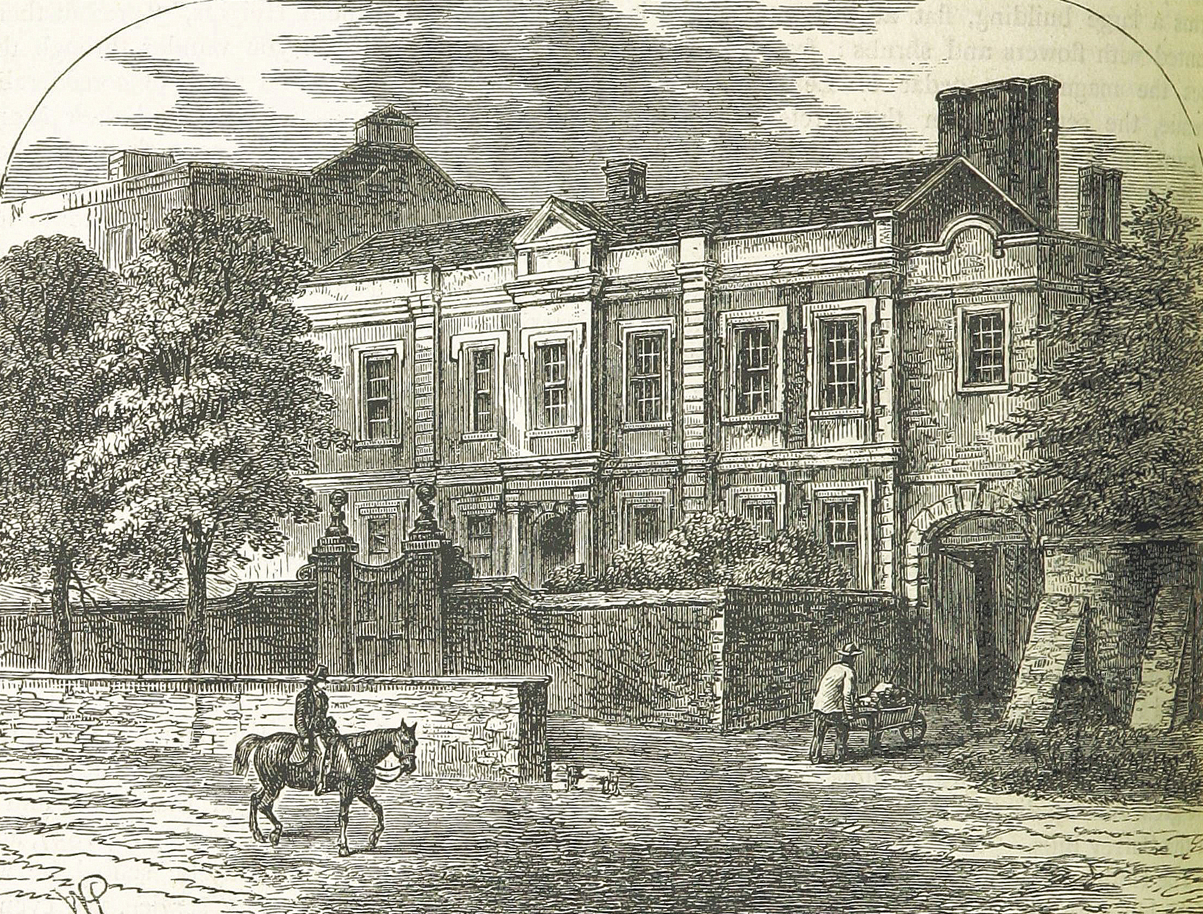
The first known Jewish country house was Cromwell House (now 104 Highgate Hill) in Hampstead (above). Alvaro da Costa, originally a Portuguese Jew, bought the copyhold in 1675. Thirty years later one critic would describe the area around Hampstead as "overstocked with Jews". Etching by William H. Prior, in Old and New London etc, George Walter Thornbury, 1873. Reproduced under a CC.0 licence courtesy of The British Library/Flickr Commons.
In 1753, a bill allowing the naturalisation of foreign Jews proved controversial. Georgian Britain was not a modern democracy but a state dominated by the land aristocracy, in which land, power and political rights were intertwined.
The 17th century legal doctrine that Jews were "perpetual enemies" of England remained influential - as did the fear Jews would take over if given the chance.
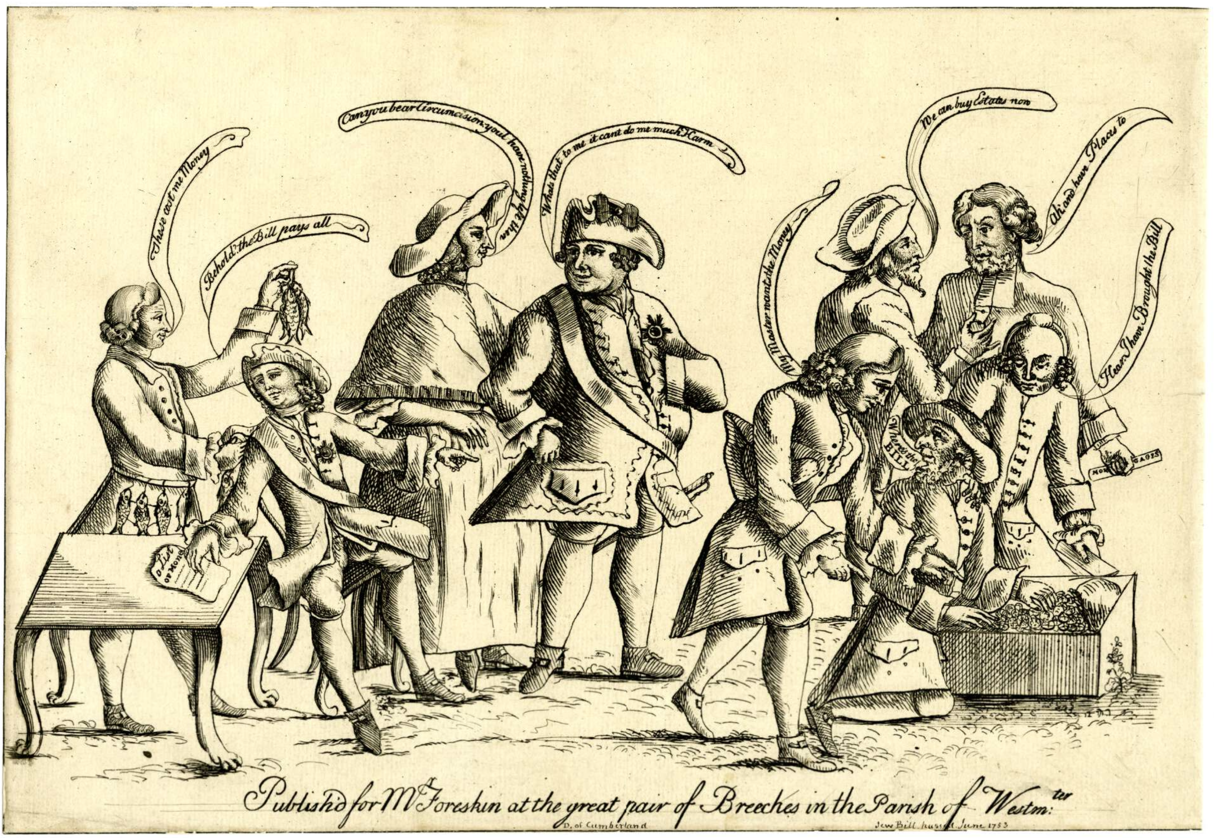
Published for Mr Foreskin at the great pair of Breeches in the Parish of Westm:ter. One of the Jews in this 1753 cartoon (above) states "We can buy Estates now", demonstrating the connection between citizenship and landownership. Other cartoons expressed a desire to prevent Jews obtaining "equal rights and privileges". (c) The Trustees of the British Museum
Jews did not have a clear legal right to own or sell freehold property in Britain until 1831, and Jewish landownership remained legally uncertain until 1846.
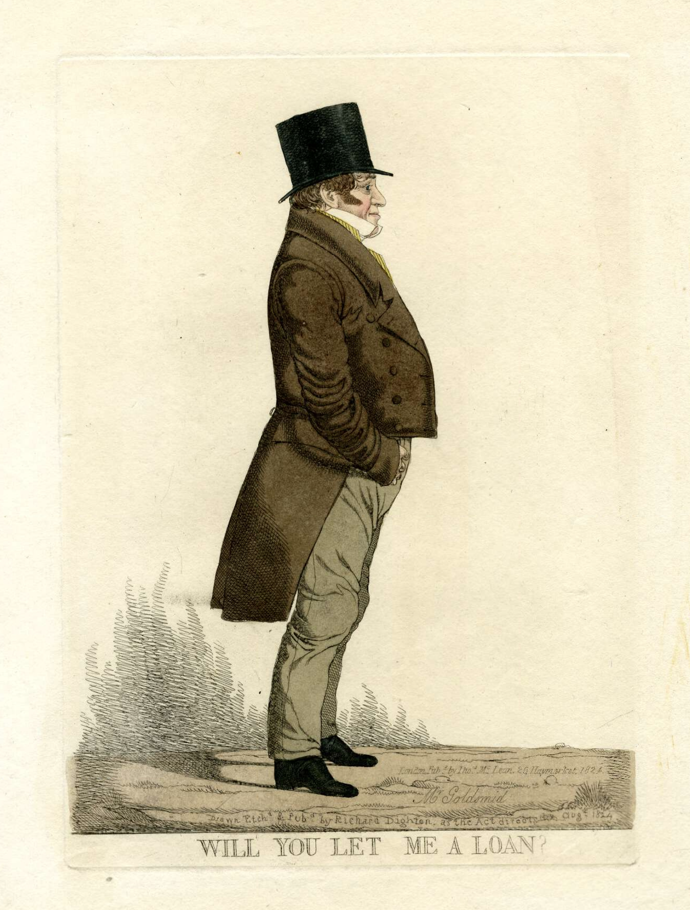
Isaac Lyon Goldsmid (left) was a prominent campaigner for Jewish rights and a founder of University College London: the first English university to accept non-Anglicans.
In 1882, Goldsmid bought East Tytherley Manor House in the name of his steward. When the law changed in 1831, the steward insisted on keeping his half. (c) The Trustees of the British Museum
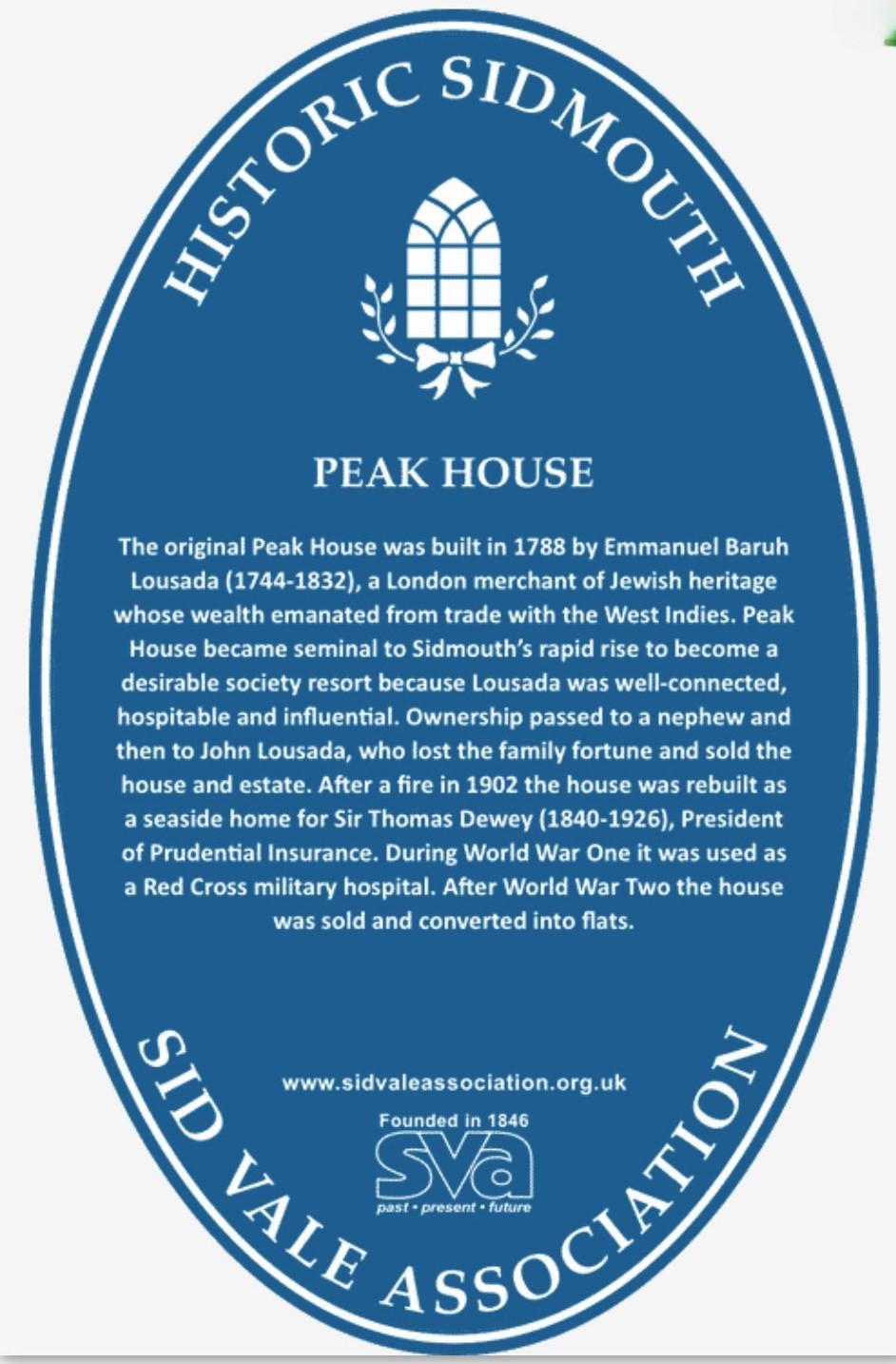
This plaque (right) suggests that the importance of Jewish landownership has not been forgotten in the Devon resort of Sidmouth. Until recently, an information board in nearby Connaught Gardens described Emanuel Baruh Lousada as: “a wealthy retired Jew, and the first of his race to risk owning land in England”. (c) Sid Vale Assocation
Exhibition continues: "In all countries political power goes with property"

