Political Power Goes with Property
Jewish interest in politics was limited before the Victorian era. Most poor Jews focused on getting by.
Like Jews, Protestant dissenters and Catholics once lacked civil and political rights. After Catholic emancipation (1829), Jews, Muslims and atheists were barred from holding public office by the need to swear an oath “upon the true faith of a Christian”.
Leading City bankers and stockbrokers like Isaac Lyon Goldsmid, David Salomons, Moses Montefiore and his nephew Lionel de Rothschild led the campaign for Jewish rights. Despite the legal complexities, all bought country estates: it was very difficult to enter politics without one.
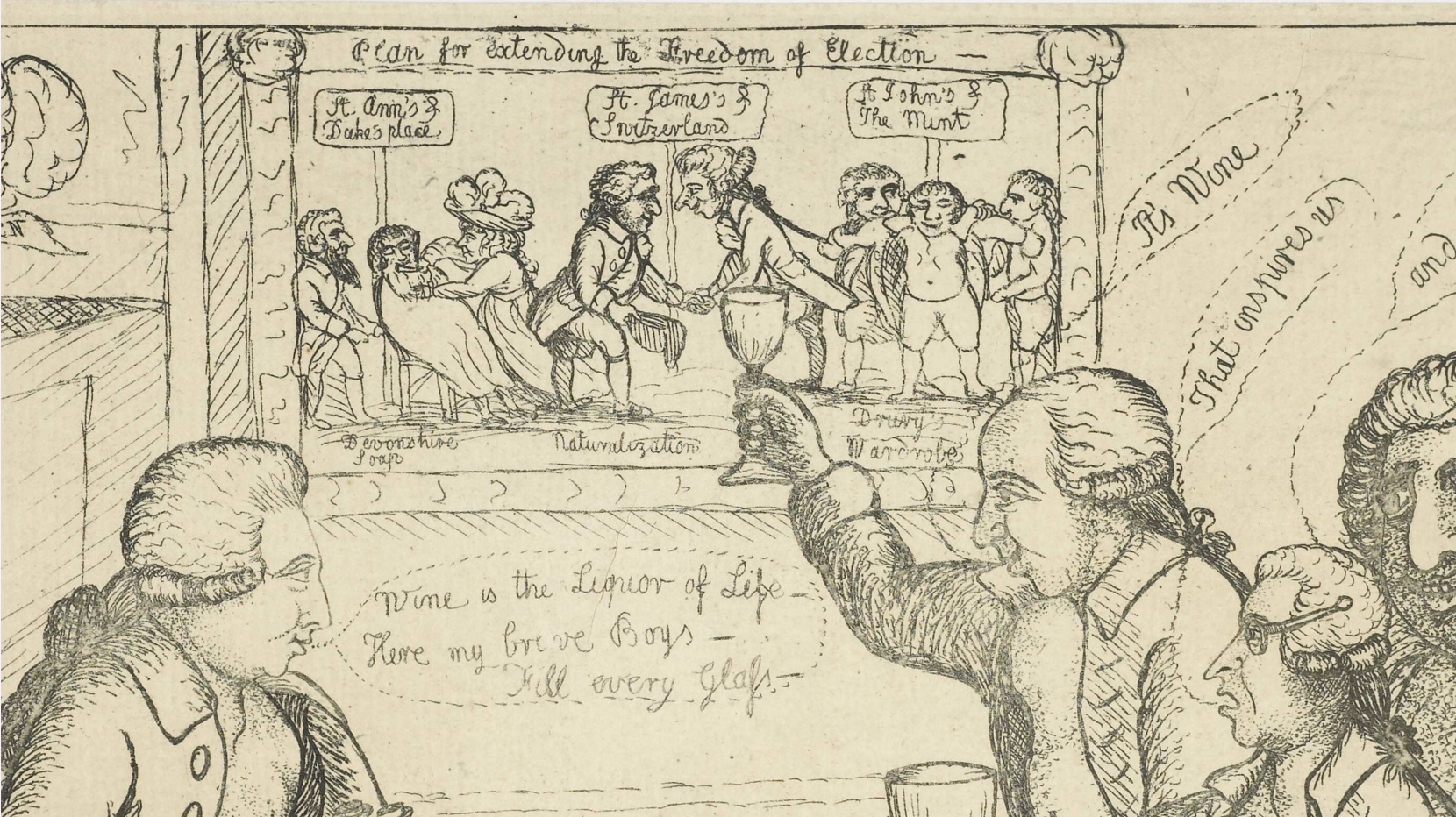
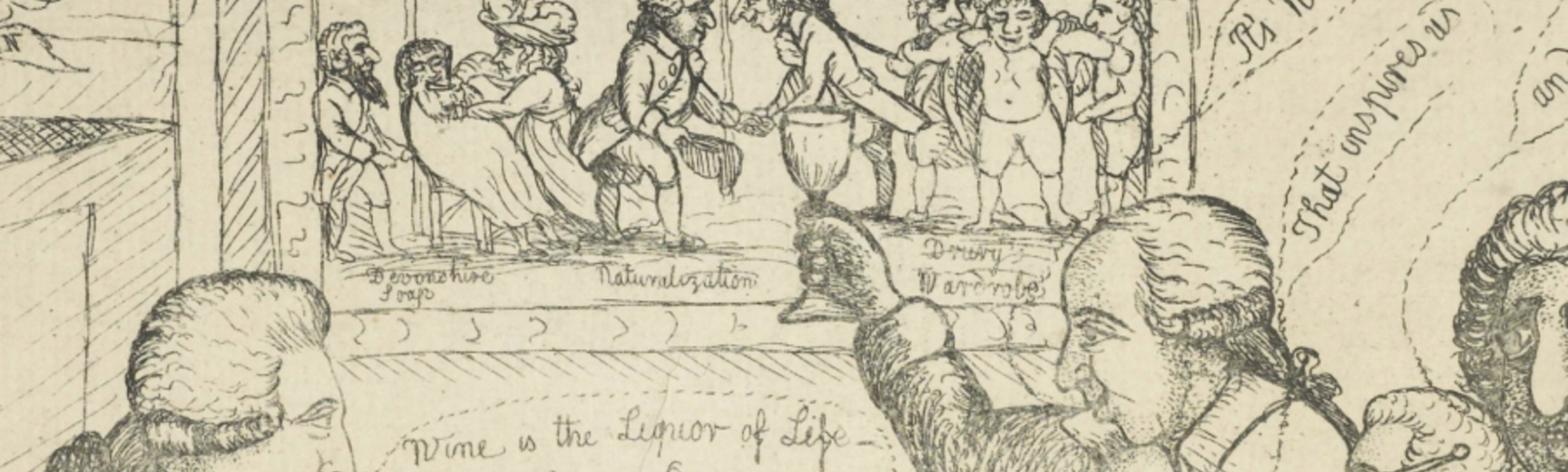
(Above) Blue and Buff (1788) alleges that Charles James Fox rigged elections in three different constituencies. In the background, we see a Jew having his beard shaved by the Duchess of Devonshire, in order to hide his Jewish identity and register an illegal vote. Another Jew waits in line. This is “Devonshire Soap”. © The Trustees of the British Museum
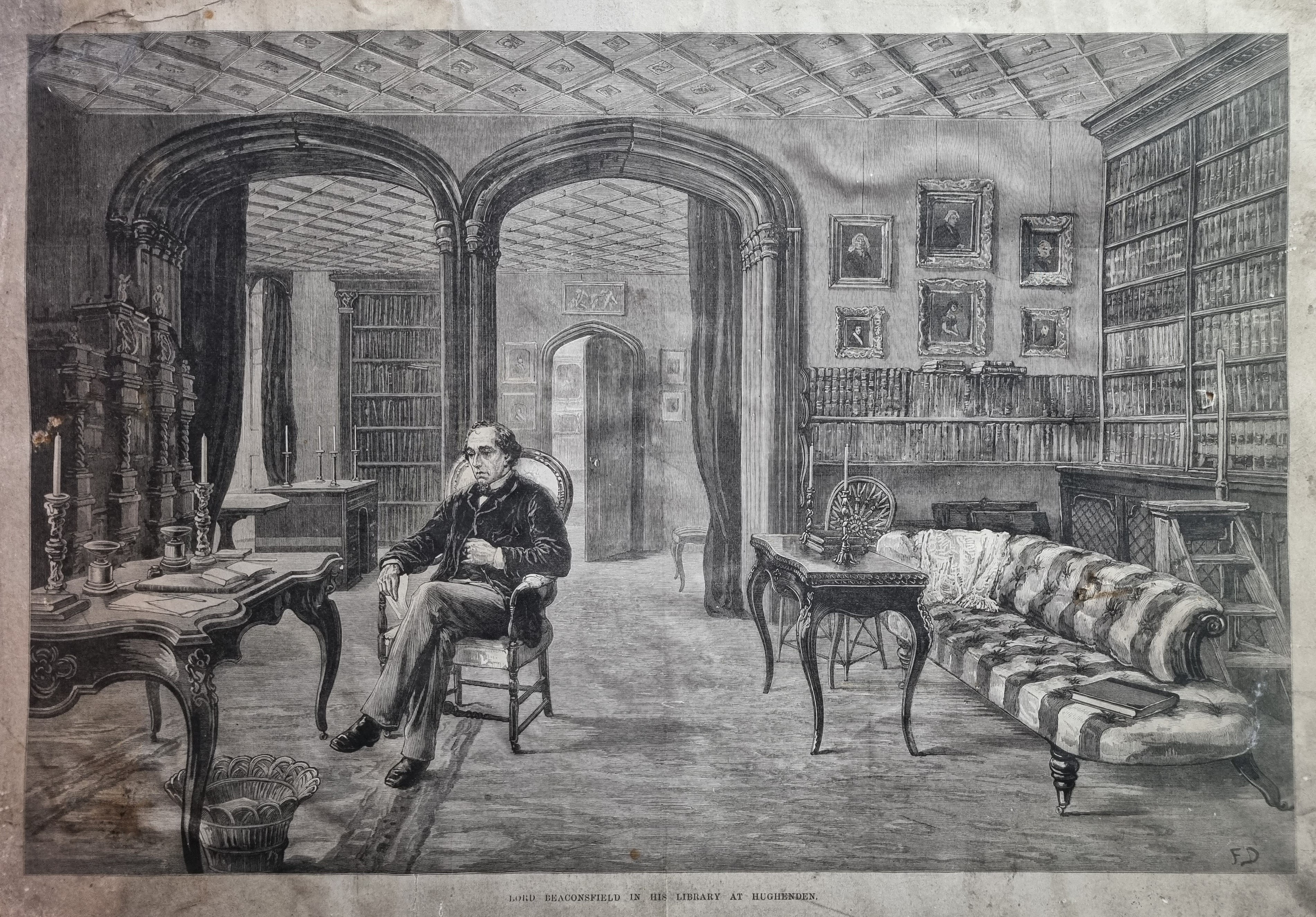
Benjamin Disraeli in his library at Hughenden Manor (1881). Disraeli was born a Jew but could become an MP, and later Prime Minister, because he was baptised as a child. As leader of the Tory Party, he needed the status that came with a county constituency and a country house.
Illustrated London News, April 30 1811. © National Trust/Thomas Boggis
David Salomons was London’s first Jewish Sheriff (1835), Alderman (1847) and Lord Mayor (1855). Elected MP in 1851, he refused to take the Christian oath but took his seat, spoke, and even voted before being thrown out. The bench from which he was ejected is preserved in his country house. Courtesy of the Salomons Museum.
After 1833 the House of Lords repeatedly rejected Jewish emancipation. Opponents believed that if Jews had equal rights Britain would cease to be a Christian state. Both Lionel de Rothschild and David Salomons were elected to parliament but unable to take their seats in the Commons. Jews acquired the right to vote in 1835, and to sit as MPs in 1858.
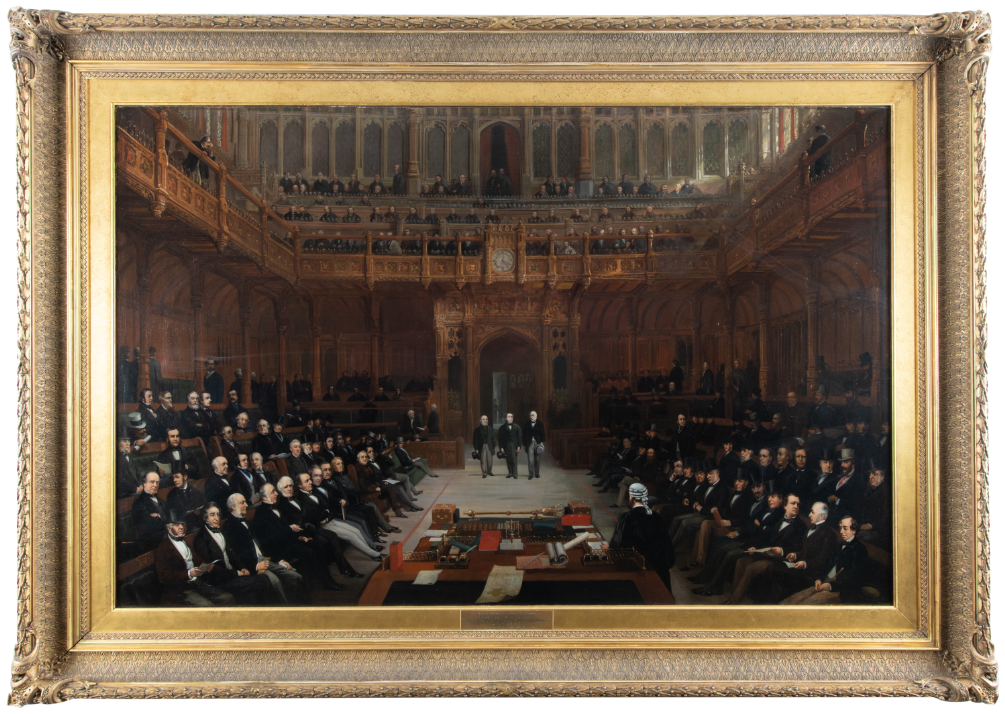
The Introduction into the House of Commons of Baron Lionel Nathan de Rothschild on 26 July 1858 by Lord John Russell and Mr Abel Smith. Rothschild was the first Jewish MP, but Queen Victoria refused him a peerage. Jews attained full political rights in 1885 when Lionel’s son became Lord Rothschild. Painting by Henry Barraud, 1872. Reproduced with the permission of The Trustees of The Rothschild Archive.
Exhibition continues: Kosher in the Countryside

